Chemical Safety Branching Scenarios

This eLearning was built for a Chemical Plating team's onboarding training. New hires joining need to be trained on safe practices for handling chemicals in the department. The team is small so each individual needs to think critically and act fast as there isn't always someone standing there to lend a hand.
The training was divided into 3 modules: the chemistry in the factory, how to handle common situations, and recognizing a near miss or good catch.
In this portfolio experience, users only have access to the Handling module, which is developed as several branching scenarios. Each scenario was based off of different situations that the team had to overcome.
The overall goal was to ensure training for new hires regarding safety absolutes is consistent and measurable.
Create a module focused on chemical handling and thinking safely during potential safety situations.
Deliver the training with consistent content for each learner targeting the specific exactly what is needed for new team members.
Provide learners the freedom and safety net to make mistakes before needing to make decisions in critical environments.
Objectives & Goals
My Roles & Responsibilities
Learning Strategy: I developed the path users take from start to completion, incorporating adult learning theories such as behaviorism (through immediate feedback) and cognitivism (through content chunking).
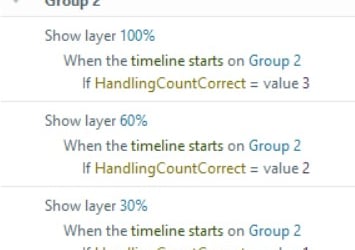
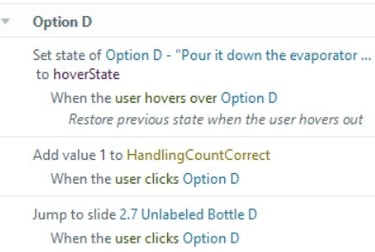
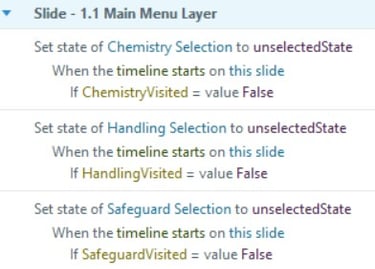
Course Authoring: I built the entire eLearning through Articulate Storyline 360 with the use of states, variables, and conditions.
Snapshot
Tools Used:
Articulate Storyline360
Claude AI
FreePik Generative AI
Applied Features:
Media States
Conditional Statements
Variable
Process & Approach
Content Collection: I organized information provided by subject matter experts. From interviews, feedback, and documented issues, I created the branching scenarios with realistic outcomes for the Handing module.
AI Access & Claude: I wrote the scenario starting points for the paths within the Handling module. With the use of AI (through Claude by Anthropic) I was able to ensure each of the paths through the scenarios were realistic, challenging, and users were given a way to recover from simpler mistakes. Claude's AI model analyzed the scenarios that I had written and helped reduce redundant choices and endings with realistic outcomes.
Adult Learning Theories: I worked to implement behaviorism, focusing on what the users are did, and cognitivism, focusing on what the users learned. Within these concepts I built targeted feedback, and broke out the information into digestible formats.